Malawi Public Hospital Doctors Train on Budget IV Supplies as Private Colleagues Use Infusion Pumps
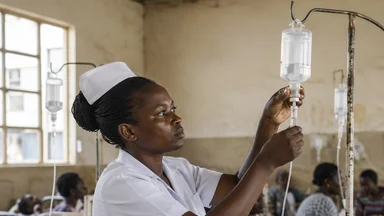
In a Lilongwe public ward, a nurse counts drops per minute by watch, hanging a saline bag from a metal hook. Across town, a private hospital nurse sets a pump and walks away, trusting an alarm to signal trouble. The same drug, the same clinical goal — but the delivery systems could not be more different. This gap, between budget IV supplies in public hospitals and advanced infusion pumps in private ones, is not merely about equipment. It is about how health systems train their workforce, allocate resources, and ultimately determine patient safety by setting.
A Routine IV in Lilongwe: What One Patient Saw
Chifundo Banda, a 34-year-old farmer from a district outside Lilongwe, was admitted to a public hospital for severe dehydration after a bout of diarrhoea. She remembers the nurse hanging a clear bag of saline on a simple metal stand. The nurse counted the drops, adjusted the roller clamp, and told Chifundo's sister to keep an eye on the bag. “If it runs out, call me,” the nurse said. There was no pump, no alarm, no automatic shut-off.
Chifundo’s sister sat by the bed for four hours, watching the bag slowly empty. At one point, the drip stopped because the tubing had kinked. She called the nurse, who unkinked it and recalculated the rate. “I was afraid I would miss the moment it emptied and air would go into her vein,” the sister later said. Such fears are common in public wards where manual IV administration is the norm.
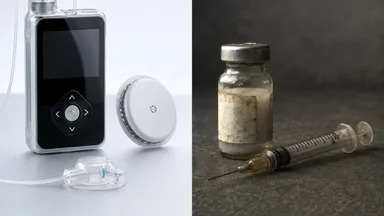
Across the city, at a private hospital that serves insured patients and those who can pay out-of-pocket, a similar scenario unfolds differently. A patient receiving the same type of fluid has a programmable infusion pump at the bedside. The pump delivers the exact rate, alerts the nurse if the line is occluded, and beeps when the bag is nearly empty. The nurse checks on the patient periodically, but the pump does much of the monitoring work.
This contrast is not unique to Malawi. It reflects a broader pattern across low- and middle-income countries (LMICs) where public and private sectors operate under vastly different resource constraints. The patient experience — and the safety of that IV — depends largely on which door they walk through.
Training on Budget: The Public-Sector Workaround
The Ministry of Health in Malawi runs IV-therapy workshops for nurses, often using donated equipment and basic supplies. These sessions teach the fundamentals: calculating drip rates by hand, setting up a gravity-fed system, and recognising signs of infiltration or phlebitis. Trainers emphasise ratio calculations — drops per millilitre multiplied by prescribed hourly volume divided by 60 — because on the ward there will be no pump to do the math.
Nurses practice with donated infusion sets that may be expired or of varying quality. The workshops cover how to troubleshoot common problems: a clogged air vent, a roller clamp that slips, a bag that hangs too low. But the training rarely includes programmable pumps, because those devices are not available in most public hospitals. As of late 2024, no national standard exists for infusion equipment in Malawi’s public sector.
Budget constraints drive this reality. The Ministry’s procurement list for consumables includes basic IV tubing, cannulae, and saline, but not infusion pumps. A single programmable pump can cost several hundred US dollars — a sum that would cover hundreds of basic administration sets. For a system that struggles to stock paracetamol, pumps are a luxury.
Yet the cost of not having pumps is harder to quantify. Manual IV administration carries well-documented risks: inaccurate flow rates, fluid overload, air embolism, and infection from repeated manipulation. A 2023 study in a similar setting found that nearly one in ten manually administered IVs had a rate error of more than 50% from the prescribed dose. In a ward with one nurse per thirty patients, such errors can go unnoticed for hours.
Consider the case of Queen Elizabeth Central Hospital in Blantyre, one of the largest public referral hospitals in Malawi. On its medical wards, nurses often manage up to forty patients each, many on IV fluids. A senior nurse there described how she has to prioritise which IVs to check first — those on critical medications like antibiotics or potassium, leaving saline-only drips for later. “Sometimes a bag runs dry and the line fills with air before I get there,” she said. “We train our nurses to be vigilant, but vigilance has limits when you are stretched thin.” The hospital has a few infusion pumps, donated by a non-governmental organisation, but they are reserved for the intensive care unit. On general wards, manual drips are the rule.
Another example comes from Mzuzu Central Hospital in the north. There, a nurse educator runs quarterly IV workshops using a single donated pump for demonstration. “I show them how it works, but they know they will never see one on the ward,” she said. “Some nurses have never touched a pump.” The educator has advocated for a small stock of pumps for training, but the hospital’s budget is already oversubscribed. “We need to buy gloves and gauze first,” she explained.
Private Hospitals: Pumps as Standard, Training as Perk
In Malawi’s private hospitals, infusion pumps are standard equipment on most wards. Nurses receive training from the manufacturers — often a half-day session when a new device is introduced. The pumps are programmed to deliver fluids at precise rates, with alarms for occlusion, air-in-line, and low battery. These features reduce the bedside monitoring burden and lower the risk of human error.
The cost of these pumps and the training is passed to patients through insurance premiums or out-of-pocket fees. A private hospital stay in Malawi can cost ten times what a public ward charges, but for those who can afford it, the added safety is a clear benefit. Nurses in private settings are expected to master pump troubleshooting — clearing an air-in-line alarm, replacing a faulty cassette, adjusting settings for paediatric patients.
Some private hospitals also run in-service training sessions on IV therapy, covering both manual and pump-based methods. These sessions are often led by senior nurses or clinical educators who have attended regional workshops. The contrast with public-sector training is stark: private nurses learn both the low-tech and high-tech approaches, while public nurses are trained only for the low-tech reality they will face.
But the private sector is not immune to problems. Pumps break down, maintenance contracts lapse, and nurses may become over-reliant on alarms. In some cases, private hospitals use older pumps that are difficult to programme, leading to user errors. Still, the overall safety margin is wider than in public wards, where a single nurse may manage multiple IVs without any electronic assistance.
A specific incident at a private hospital in Blantyre illustrates the trade-offs. A nurse programmed a pump to deliver a potent antibiotic over 30 minutes, but the pump’s battery died mid-infusion. The alarm sounded, and the nurse replaced the pump, but the patient missed a dose and had to restart therapy. “We are so dependent on pumps that when they fail, we scramble,” the nurse said. “But at least we have a backup pump. In public hospitals, there is no backup.”
The Skill Gap That Policy Ignored
Malawi does not have a national equipment standard for infusion therapy. The Ministry of Health sets guidelines for clinical practice, but they do not specify what type of IV delivery system should be used in different levels of care. This policy gap means that each hospital — public or private — decides independently what equipment to buy and what training to offer.
The result is a two-tiered system of skills. Public nurses become expert at manual drip counting, but they rarely learn how to operate or troubleshoot a pump. Private nurses learn pump skills, but they may lose proficiency in manual methods. When a private nurse moves to a public hospital — or when a pump fails and a backup manual system is needed — the skill gap becomes dangerous.
This divide is not unique to Malawi. A 2024 survey of nurses in five African countries found that only 40% of public-sector nurses had received any formal training on infusion pumps, compared with 85% in private facilities. The same survey found that pump-related adverse events — such as over-infusion or air embolism — were more common in public hospitals, though underreporting likely masks the true scale.
Consider the case of Grace Mwale, a nurse who moved from a private hospital in Lilongwe to a public district hospital. In her first week, she was asked to start an IV for a dehydrated child. She instinctively reached for a pump, but there was none. “I had to calculate the drip rate by hand, something I hadn’t done in years,” she recalled. “The child was tiny, and I was terrified of giving too much fluid.” She managed, but the experience shook her confidence. “We need to be trained for both worlds,” she said.
Policy makers have focused on other priorities: expanding immunisation coverage, reducing maternal mortality, and strengthening disease surveillance. Infusion safety has not received the same attention. But as the burden of non-communicable diseases grows, and more patients require IV therapies for conditions like diabetes complications or sepsis, the gap in IV delivery systems will become harder to ignore.
A counter-argument exists: some clinicians argue that manual IV administration is not inherently unsafe if nurses are well-trained and staffing ratios are adequate. They point to countries like the UK, where manual drips were the norm for decades before pumps became widespread. “The problem is not the method, it is the workload,” said a senior physician in Lilongwe. “If a nurse has only five patients, manual drips are fine. But when you have thirty, errors happen.” This perspective suggests that addressing staffing shortages could mitigate the safety gap even without expensive pumps.
However, even with adequate staffing, manual IVs carry inherent risks. A study in a South African hospital found that the rate of phlebitis — inflammation of the vein — was nearly twice as high with manual drips compared with pump-assisted infusions, likely due to inconsistent flow rates causing irritation. Another study in Tanzania showed that manual IVs were more likely to be infiltrated (fluid leaking into surrounding tissue) because nurses could not detect resistance changes as quickly as a pump would.
What the Malawi Experience Suggests for Other LMICs
Some countries have begun to address the infusion gap. In Kenya, a donor-funded programme introduced basic infusion pumps to several public hospitals, along with training and maintenance contracts. Early results showed a reduction in IV-related errors and improved nurse satisfaction. However, when donor funding ended, some hospitals could not afford replacement parts and reverted to manual systems.
Rwanda took a different approach, introducing low-cost mechanical drip regulators that do not require batteries and are more affordable than electronic pumps. These devices allow nurses to set a flow rate with a dial, reducing the need for constant adjustment. The Ministry of Health included them in the essential equipment list and trained nurses in their use. Early reports suggest they have reduced the time nurses spend on IV monitoring.
Both experiences highlight a key lesson: training must match the actual equipment on the ward. A nurse who learns on a programmable pump but works in a ward with only gravity sets will struggle. Conversely, a nurse trained only on manual methods may be intimidated by a pump. Pre-service education, in nursing schools and medical training programmes, should cover both methods so that graduates can adapt to whatever setting they enter.
Simple checklists can also reduce errors. The World Health Organization’s Safe Surgery Checklist inspired similar tools for IV therapy. A Malawi-based pilot tested a four-item checklist for starting an IV: confirm patient identity, check drug and dose, set correct rate, and label the bag. Nurses reported fewer omissions, and patients had fewer complications. Such low-cost interventions can work even where pumps are not available.
Another promising innovation is the use of colour-coded tubing to match IV sets with specific infusion rates. In a pilot at Kamuzu Central Hospital in Lilongwe, nurses used pre-printed labels indicating the drip rate for common fluids (e.g., “20 drops per minute for maintenance”). This reduced calculation errors, especially for junior nurses. “It’s not a pump, but it helps,” said the nurse educator leading the pilot. “We need more of these simple fixes.”
Practical Takeaways for Health-System Planners
For planners looking to close the IV safety gap, the first step is to audit current equipment across all hospitals — public, private, and mission. Knowing what is actually on the ward, not what was procured, is essential. Many hospitals have broken pumps that are never used, or have more gravity sets than needed. A simple inventory can reveal mismatches between training and tools.
Pre-service training should be aligned with the equipment that graduates will most likely encounter. If most public hospitals use gravity sets, nursing curricula should emphasise manual drip calculation and troubleshooting. At the same time, students should have exposure to pumps, even if only in simulation, so they are not lost if they move to a private setting or if pumps become more common.
Low-cost mechanical drip regulators, like those used in Rwanda, offer a middle ground. They cost a fraction of electronic pumps and require no batteries. Planners should consider adding them to essential equipment lists and training nurses in their use. Maintenance contracts, often overlooked, should be built into procurement from the start. A pump that sits broken for six months is worse than no pump at all.
Finally, health systems should track adverse events linked to infusion method. Without data, the problem remains invisible. A simple register for IV-related incidents — phlebitis, infiltration, rate errors — can help hospitals identify where the risks are highest and target interventions accordingly. The goal is not to eliminate all manual IVs, but to ensure that every patient, regardless of wealth, receives fluids safely.
One additional consideration is the role of community health workers in rural areas. In Malawi’s remote clinics, IV therapy is rare, but when needed, it is often administered by medical assistants with limited training. A programme in Thyolo District trained community health workers to use low-cost drip regulators for rehydration in cases of severe diarrhoea. The results were promising: fewer patients required referral to district hospitals. Scaling such initiatives could reduce the burden on overstretched public wards.
The private sector, meanwhile, could play a role in standardising training. Some private hospitals in Malawi have expressed willingness to open their training sessions to public-sector nurses, but logistical and financial barriers remain. “We would love to share our expertise, but we need funding for materials and transport,” said a private hospital administrator. A public-private partnership model, perhaps supported by donors, could bridge the training gap without requiring large equipment investments.
In the end, the IV divide in Malawi is a symptom of a deeper health-system challenge: how to provide safe care when resources are scarce. The answer is not simply to buy more pumps, but to think strategically about training, equipment, and staffing. Patients like Chifundo Banda deserve the same level of safety regardless of which hospital they enter. Until policy makers treat infusion safety as a priority, the gap will persist — and patients will continue to pay the price.
This article is for informational purposes only and does not constitute medical or professional advice. Readers should consult qualified health providers for personal health decisions.