Tuberculosis Drug Resistance Traced Through South African Mining Shifts
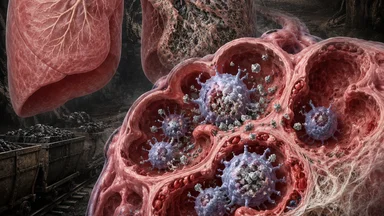
In the underground tunnels of South Africa's gold mines, a bacterium is learning to outsmart the drugs meant to kill it. The story of multidrug-resistant tuberculosis (MDR-TB) in this country is not primarily about a pathogen's cleverness, though that plays a role. It is about the conditions that give resistance a chance to emerge and the human movements that carry it across borders. The mining corridor from Gauteng to the Free State has become a living laboratory of how an ancient disease adapts to modern medicine.
Gold and Silica, Then Coughs That Won't Quit
The connection between mining and tuberculosis is not new. In the late 19th century, doctors in Johannesburg noted that gold miners died from a wasting lung disease they called "miners' phthisis." Only later did they understand that silica dust, released when quartz-bearing rock is drilled and blasted, scars the lungs and disables the immune cells that normally contain Mycobacterium tuberculosis. A miner exposed to silica over a career has a risk of developing active TB that is roughly three times higher than someone without that exposure.
What changed in recent decades is the drug sensitivity of the strains circulating in the mines. During the 1990s and early 2000s, most TB cases in South African miners responded to the standard four-drug regimen. But as HIV prevalence soared and treatment programs struggled to ensure completion, resistant strains began to appear. By the mid-2010s, surveys in the gold mining sector found that roughly 5 to 10 percent of new TB cases were multidrug-resistant—meaning they did not respond to at least rifampicin and isoniazid, the two most powerful first-line drugs.
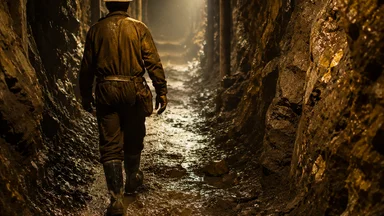
The mines themselves are crowded environments. Men live in hostels with bunks only a meter apart, share eating spaces, and work in confined underground tunnels where ventilation is mechanical and often inadequate. A single person with undiagnosed, smear-positive TB can infect a dozen or more coworkers before symptoms become severe enough to seek care. When that person's strain is already resistant, the infection transmitted is resistant from the start.
Migrant workers from Lesotho, Mozambique, and the Eastern Cape make up a large share of the mining workforce. They rotate between the shaft, the hostel, and their home village every four to six months. This movement, essential for their economic survival, also makes TB control almost impossible. A miner who starts treatment in Johannesburg may stop when he returns home, unable to access the same drugs in a rural clinic. The incomplete course selects for resistance, and the resistant strain travels with him.
One estimate, from a 2019 study in the International Journal of Tuberculosis and Lung Disease, put MDR-TB incidence among miners at five to ten times the national average. That figure is now several years old, and many TB clinicians believe the ratio has grown wider since then, as surveillance has improved but control has not kept pace.
How a Bacterium Learns to Outsmart Rifampicin
Resistance to rifampicin, the cornerstone of first-line TB therapy, arises from a single point mutation in the rpoB gene. This gene encodes the beta subunit of RNA polymerase, the enzyme that transcribes DNA into RNA. Rifampicin binds to that subunit and blocks transcription, killing the bacterium. A mutation that slightly alters the shape of the binding site prevents the drug from latching on, and the bacterium survives. The change is tiny—one nucleotide among more than four million in the bacterial genome—but it renders the most powerful TB drug useless.
Isoniazid resistance is more varied. Mutations in the katG gene, which encodes an enzyme that activates the drug, are the most common. The mutated enzyme cannot convert isoniazid into its active form, so the drug never gets a chance to work. Mutations in the inhA gene, involved in mycolic acid synthesis, also confer resistance, often at lower levels. A strain can accumulate both mutations over time, becoming resistant to multiple drugs in a stepwise fashion.
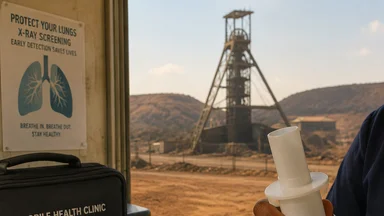
Diagnosing resistance has become faster thanks to GeneXpert, a molecular test that detects M. tuberculosis DNA and identifies mutations in the rpoB gene in about 90 minutes. The South African National Health Laboratory Service has deployed hundreds of GeneXpert machines across the country, including in mining clinics. But the speed of the test does not always translate into speed of action. In rural clinics, the laboratory confirmation may take days or weeks to reach the prescribing clinician, especially if results are printed and carried by hand from a district hospital. During that delay, the patient with undiagnosed MDR-TB continues to cough, sharing resistant bacteria with family members and anyone else in close quarters.
The biology of resistance is straightforward. The system around it is not. A mutation that confers resistance carries a small fitness cost for the bacterium—it replicates slightly more slowly than its drug-sensitive counterpart in the absence of the drug. But in the presence of the drug, the resistant strain has a decisive advantage. The only way to prevent that advantage from spreading is to make sure that every patient with drug-sensitive TB completes their full course of treatment, so that no partially treated infection gives rise to a resistant mutant. That is where the mining labor system creates its biggest obstacle.
The Shuttle That Spreads Resistance: Migrant Labor Circuits
The typical pattern begins with a man in his thirties from a village in Lesotho. He signs a contract with a mining company, undergoes a medical screening that may or may not include a chest X-ray, and moves into a hostel near the shaft. He works twelve-hour shifts, six days a week, for four months. Then he returns home for a month, bringing his earnings and, often, a cough he has been ignoring.
If he is diagnosed with TB during his time at the mine, treatment begins under a directly observed therapy (DOT) program. A nurse watches him swallow his pills each morning. The regimen for drug-sensitive TB lasts six months. But his contract may end before that. When he goes home, the DOT stops. The clinic in his village may not have the same drugs, or he may not have the money to travel there daily. He stops taking the pills. The surviving bacteria, the ones that were only partially suppressed, now have a chance to multiply. Some of them will have acquired resistance mutations during the sub-lethal exposure.
Studies have traced this pattern. A 2023 genomic epidemiology paper in Nature Communications sequenced MDR-TB strains from patients in Lesotho and found that the majority shared a recent common ancestor with strains circulating among miners in Johannesburg. The bacteria were moving along the same routes as the workers. Cross-border surveillance between South Africa and its neighbors remains patchy. No formal system alerts a clinic in Maseru when a patient who started treatment in Carletonville returns home. The patient is simply lost to follow-up.
The economic logic that drives migration also drives resistance. A miner earns roughly ten times what he could make in his home village. He cannot afford to turn down a contract. The mining companies, in turn, have little incentive to provide continuous care for a workforce that rotates every few months. The result is a system that selects for the most dangerous bacteria and then distributes them across the region.
Treatment interruption is not the only risk. Even when a miner completes his course, the conditions in the hostel mean he is likely to be reinfected by a coworker who did not. In high-transmission settings, reinfection with a resistant strain can undo the success of a fully treated drug-sensitive case. The cycle repeats.
MDR-TB Treatment: A Three-Year Regimen That Few Complete
Until recently, treating MDR-TB meant two years of painful injections and a cocktail of toxic drugs that caused permanent hearing loss, psychosis, and kidney damage. Cure rates hovered around 50 percent globally. The regimen was so grueling that many patients simply stopped coming to clinic.
That has changed with the introduction of bedaquiline, pretomanid, and linezolid—the BPaL regimen. In clinical trials, this all-oral, six-month course cured more than 90 percent of patients with extensively drug-resistant TB. The World Health Organization endorsed it in 2022, and South Africa began rolling it out in selected sites. But the real-world effectiveness has been lower. A 2024 observational study from the South African Medical Research Council found that about 75 percent of patients on BPaL achieved a favorable outcome—still a major improvement over older regimens, but far from the trial results.
Linezolid, one of the three drugs, causes peripheral neuropathy in roughly 40 percent of patients. The numbness and pain in the feet and hands can be severe enough that patients stop taking the drug. Dose reductions help but may reduce efficacy. In the mining hostels, where daily DOT is supposed to ensure adherence, the reality is that patients often skip doses when side effects become unbearable. A nurse may mark the card as "observed" even when the patient has not swallowed the pill, because confrontation is difficult and the system rewards completion statistics over honesty.
Directly observed therapy itself is a logistical challenge in the mining setting. The standard requires a patient to attend a clinic every single day for the duration of treatment. For a miner working a night shift, that means walking to the clinic during the only hours he has to sleep. After three months, adherence in mining-hostel DOT programs drops below 50 percent, according to a 2022 audit by the South African Department of Health. The WHO estimates that globally, only one in four patients diagnosed with MDR-TB completes treatment. South Africa's mining corridor is not an exception.
The new shorter regimen is a genuine advance. But it is not a magic bullet. It still requires daily observation, management of side effects, and a functioning supply chain for drugs that are expensive and sometimes scarce. The 2025 global stockout of bedaquiline, caused by a manufacturing problem at one of the two suppliers, briefly forced clinics to switch patients to older, less effective regimens. The fragility of the system is a constant threat.
What the Mining Houses Have Done — and Haven't Done
Anglo American, one of the largest mining companies operating in South Africa, has run workplace wellness programs for decades. Its clinics offer free GeneXpert testing on-site, and employees with TB are entitled to paid sick leave during treatment. The company settled a class action lawsuit over silicosis in 2019, paying out roughly 500 million rand to affected workers. That settlement acknowledged that the industry had known for decades about the risk of silica dust and had not done enough to control it.
But TB screening coverage in the mining workforce remains below 60 percent, according to a 2023 report by the Bench Marks Foundation, a nonprofit that monitors corporate social responsibility. Many smaller mining contractors, who employ a large share of the migrant workforce, do not provide any health services at all. A miner working for a contractor may never receive a chest X-ray or a sputum test unless he becomes symptomatic enough to seek care on his own.
Private clinics operated by the mining houses often discharge patients with a prescription and a referral letter but no mechanism for follow-up. When a patient returns to Lesotho or Mozambique, the referral letter is rarely used. The clinic in the home village may not have the capacity to manage MDR-TB, which requires isolation, specialized drugs, and daily DOT. The patient simply falls out of care.
No mining company publishes its MDR-TB cure rates. The data exist—companies collect it for their own internal monitoring—but they are not shared publicly. Without transparency, it is impossible to know whether the wellness programs are actually improving outcomes or merely documenting the scale of the problem. The South African government has mandated that all mines submit TB data to the National Institute for Occupational Health, but enforcement is weak, and compliance varies.
The industry's response to the MDR-TB crisis has been piecemeal. Some mines have improved dust control by installing better ventilation and water sprays. Others have built separate dormitories for TB patients to reduce transmission. But these measures are expensive, and the mining sector has been under financial pressure from falling gold prices and rising costs. The incentive to invest in long-term health interventions is weaker than the incentive to extract ore as cheaply as possible.
Lessons for Other Settings: Silica, Congregation, and Resistance
The South African mining story is not unique. Any setting where people work in close proximity and breathe in particles that damage the lungs can become a TB amplifier. Prisons, factories, and informal settlements share the same biology: silica or other fine particulates impair the ability of alveolar macrophages to kill mycobacteria, so the infectious dose required to establish infection is lower, and the progression from latent to active disease is faster.
In Cape Town's townships, genomic surveillance has found MDR-TB strains that match those circulating in the mines of Gauteng. The bacteria did not evolve independently; they were carried from the mines by former workers or their families. The boundary between occupational and community TB has dissolved. In South Africa's national TB prevalence survey, released in 2024, the overall rate of bacteriologically confirmed TB was roughly 850 per 100,000 adults—among the highest in the world. The rate had plateaued after a decade of decline, suggesting that current control efforts are not sufficient to push the epidemic downward.
The lessons for other settings are straightforward but hard to implement. Controlling occupational silica exposure with proper ventilation and respiratory protection would reduce the susceptibility of the workforce. Providing paid sick leave and continuous treatment across borders would reduce the selection pressure for resistance. Strengthening cross-border surveillance would allow health systems to track patients who move and ensure they complete therapy. None of these interventions are technically difficult. They require political will, regulatory enforcement, and a willingness to spend money on prevention rather than only on treatment.
The bacterium that causes TB has been evolving for tens of thousands of years. It will continue to evolve. The question is whether the systems we build around it will evolve faster. In South Africa's mining corridor, the answer so far is not clear. The resistance is already here. The question is whether we will contain it or let it spread.
This article is for informational purposes only and does not constitute professional medical advice. Individuals with concerns about TB should consult a qualified health provider.