UK NHS Insulin Prescription Rules Split Care Between Type-1 and Type-2 Patients
In the United Kingdom, the National Health Service (NHS) treats diabetes as a single disease in name but splits its insulin prescribing into two distinct tracks. Patients with type-1 diabetes—who produce no insulin—routinely receive the latest analogue insulins, continuous glucose monitors, and insulin pumps. Those with type-2 diabetes, who still make some insulin but cannot use it effectively, often face a slower, more restricted path. They must first fail on metformin and other oral drugs before being considered for insulin, and even then, older human insulins are often preferred over newer analogues.
The result is a care divide that has little to do with clinical need and everything to do with how the system manages costs. A patient with type-2 diabetes and an HbA1c of 9% may wait months longer for optimal insulin therapy than a type-1 patient with similar glucose levels. This split raises uncomfortable questions about equity, evidence, and whether the NHS is treating the disease or the label.
One Diagnosis, Two Prescription Paths
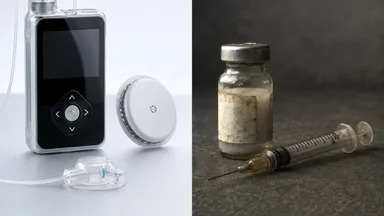
NHS guidelines, developed by the National Institute for Health and Care Excellence (NICE), explicitly differentiate insulin access by diabetes type. For type-1 patients, the guidance is generous: they are offered insulin pumps (continuous subcutaneous insulin infusion) if they meet criteria such as disabling hypoglycaemia, and they receive flash glucose monitoring (e.g., FreeStyle Libre) as standard. Analogue insulins—such as insulin glargine or insulin lispro—are first-line, chosen for their more predictable absorption and lower risk of hypoglycaemia compared with older human insulins.
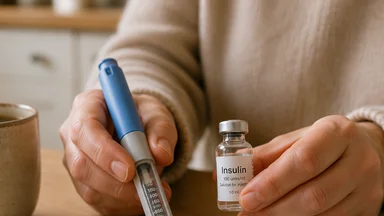
For type-2 patients, the path is more guarded. NICE recommends insulin only after metformin and other oral agents (like sulfonylureas or DPP-4 inhibitors) have failed or are contraindicated. Even then, the default is often human insulin (e.g., NPH or regular insulin), not analogues. Many local formularies restrict analogue insulins to type-2 patients who have experienced recurrent hypoglycaemia on human insulin or who have specific clinical needs, such as pregnancy or renal impairment. This tiered system means that two patients with identical blood glucose levels—one type-1 and one type-2—receive markedly different treatment.
The rationale is partly historical: type-1 diabetes has long been viewed as a more acute condition requiring intensive insulin therapy, while type-2 has been framed as a metabolic syndrome that can be managed with lifestyle changes and oral drugs. But as type-2 progresses, endogenous insulin production declines, and many patients eventually require exogenous insulin. The question is whether the delay in access to modern insulins is clinically justified or simply a cost-containment measure.
Clinicians on the front lines see the consequences. A diabetes specialist nurse in Manchester described the frustration of having to justify each analogue insulin prescription for type-2 patients, while type-1 patients receive them automatically. 'We spend hours writing individual funding requests for things that are standard of care for type-1,' she said. 'It feels like we're treating the label, not the person.'
How NICE Guidance Codifies the Divide
The roots of this split lie in NICE technology appraisal guidance. NICE TA151 (2002), for example, evaluated long-acting insulin analogues for type-2 diabetes and concluded they were not cost-effective compared with human insulin. That appraisal has not been fully updated, despite newer evidence and lower analogue prices. As a result, many local formularies still use TA151 as a justification to restrict analogues for type-2 patients. In contrast, NICE guidance NG17 (2015) for type-1 diabetes explicitly recommends analogue insulins as first-line therapy, citing reduced hypoglycaemia risk.
The same evidence base—fewer hypos, better quality of life—applies to type-2 patients, but the cost-effectiveness threshold is applied more stringently. NICE typically uses a cost-per-QALY (quality-adjusted life year) threshold of £20,000–£30,000. For type-1, analogue insulins fall within that range; for type-2, they often do not, because the absolute reduction in hypoglycaemia is smaller in a population that already has some endogenous insulin secretion.
This logic creates a paradox: a type-2 patient who experiences severe hypoglycaemia on human insulin—a costly event that can lead to hospitalisation—may still be denied analogues on cost grounds, even though preventing that single hospitalisation would save the NHS money. Health economists argue that the QALY framework is population-based and does not easily account for individual risk. But for the patient in clinic, the policy feels arbitrary.
Local formularies add another layer of complexity. Clinical commissioning groups (CCGs) and now integrated care boards (ICBs) can impose additional restrictions. A 2023 audit by Diabetes UK found that 40% of local formularies in England required type-2 patients to try human insulin for at least six months before switching to an analogue, even if they had recurrent hypoglycaemia. Some formularies required a documented failure of two oral agents plus human insulin before approving a pump or flash monitor for type-2—a bar rarely applied to type-1.
Real-World Consequences of the Policy Gap
The prescription divide translates into measurable differences in outcomes. A 2024 study in Diabetic Medicine analysed HbA1c levels in 12,000 UK patients starting insulin. After one year, type-2 patients on human insulin had a mean HbA1c reduction of 1.2% (from 9.1% to 7.9%), while those on analogue insulins achieved a 1.6% reduction. The difference was modest but statistically significant. More striking was the hypoglycaemia rate: severe hypoglycaemic events (requiring third-party assistance) occurred in 3.8% of type-2 patients on human insulin versus 1.9% on analogues—a halving of risk.
Patient-reported outcomes also diverge. Surveys using the Diabetes Treatment Satisfaction Questionnaire (DTSQ) show that type-2 patients on analogue insulins report higher satisfaction and less fear of hypoglycaemia than those on human insulin. Yet many type-2 patients never get the chance to experience that difference, because their formulary locks them into older therapies. A 2022 analysis by the NHS RightCare programme identified 'significant unwarranted variation' in insulin prescribing across England, with some CCGs prescribing analogues to 80% of type-2 patients and others to just 30%.
The inequity persists regardless of socioeconomic status. Unlike some aspects of NHS care that split along wealth lines—such as access to talking therapies for depression, as reported in UK GP depression care splits along patient wealth lines—the insulin divide is almost entirely driven by diabetes type and local policy. A wealthy type-2 patient in a restrictive area faces the same hurdles as a poorer one. But the consequences may be harder for those with limited health literacy or support networks, who are less able to navigate the system or advocate for a formulary exception.
Hospital admission data underscore the cost. A 2023 NHS Digital report recorded 83,000 emergency admissions for hypoglycaemia in England, with an average stay of 3.2 days at roughly £400 per day. The total cost exceeded £100 million annually. Many of these admissions involve type-2 patients on human insulin. A policy that restricted analogues may save £50 million in drug costs but incur £100 million in hospitalisation costs—a false economy that the current cost-effectiveness models may not fully capture.
Economic Rationale vs. Clinical Evidence
The NHS spends roughly £1 billion annually on diabetes drugs, of which insulin accounts for about £400 million. Analogue insulins cost three to four times more than human insulins—a typical analogue pen might cost £40–60 per month, versus £15–20 for human insulin. In a system under constant budget pressure, the temptation to restrict analogues is understandable. NICE's cost-effectiveness models have historically shown that the incremental benefit of analogues in type-2 diabetes is small: a reduction in HbA1c of 0.1–0.2% and a modest reduction in hypoglycaemia, which translates to a cost per QALY above £30,000 in many analyses.
But those models have limitations. They often assume that human insulin is used optimally, with frequent dose adjustments and patient education. In practice, many type-2 patients on human insulin receive suboptimal titration. A 2023 audit by the Association of British Clinical Diabetologists (ABCD) found that 60% of type-2 patients on human insulin had suboptimal titration, defined as failure to adjust doses at least once per visit. This leads to higher hypoglycaemia rates than in trials. Real-world data from the UK Clinical Practice Research Datalink (CPRD) show that hypoglycaemia rates in type-2 patients on human insulin are 50–100% higher than in randomised controlled trials, partly because of less frequent monitoring and older age. When real-world effectiveness is used, the cost per QALY for analogues drops closer to the NICE threshold.
Another blind spot is the cost of complications. Severe hypoglycaemia can cause falls, fractures, cardiovascular events, and cognitive decline—especially in older patients. A 2024 analysis by the Health Foundation estimated that each severe hypoglycaemic event costs the NHS roughly £1,500 in direct medical costs, plus long-term care costs for those who sustain injuries. When these are factored in, the break-even point for analogue insulins shifts. Yet NICE's technology appraisals typically do not include such downstream costs in their base-case models, leaving them as sensitivity analyses that rarely change the recommendation.
Industry pricing also plays a role. The NHS negotiates insulin prices through the Voluntary Scheme for Branded Medicines and Health Technologies, but the discounts are confidential. Some analysts argue that the NHS could achieve lower prices for analogues if it committed to volume-based purchasing, as it has done with other drug classes. The contrast with GLP-1 receptor agonists is instructive: those drugs are now first-line for type-2 patients with obesity, despite costing £50–100 per month, because they offer weight loss and cardiovascular benefits that justify the cost. Insulins, by contrast, have no such 'halo' indication.
The GLP-1 Ripple Effect on Insulin Policy
The rise of GLP-1 agonists—drugs like semaglutide (Ozempic, Wegovy) and tirzepatide (Mounjaro)—has reshaped type-2 diabetes treatment algorithms. NICE now recommends GLP-1 agonists as a first-line option for type-2 patients with obesity (BMI ≥30) or high cardiovascular risk, even before insulin. This has delayed insulin initiation further, as patients and clinicians prefer a drug that promotes weight loss over one that often causes weight gain. In 2025, NHS England reported that GLP-1 prescriptions had overtaken insulin prescriptions for the first time in type-2 diabetes.
This shift has indirect effects on insulin policy. As GLP-1 agonists become more common, the patients who eventually need insulin tend to have more advanced disease—longer duration, lower endogenous insulin secretion, and higher HbA1c. These patients are precisely the ones who might benefit most from analogue insulins, yet they often face the same formulary restrictions. Moreover, the cost of GLP-1 agonists (roughly £800–1,200 per year per patient) is higher than that of most insulins, putting additional pressure on diabetes budgets. Some CCGs have responded by tightening insulin restrictions even further, creating a perverse incentive to avoid insulin altogether.
However, GLP-1 agonists are not a panacea. They are associated with gastrointestinal side effects such as nausea, vomiting, and diarrhoea, which lead to discontinuation in roughly 10–15% of patients in clinical trials. They also carry a risk of pancreatitis and, rarely, thyroid C-cell tumours. For patients with type-2 diabetes and a history of pancreatitis or medullary thyroid carcinoma, GLP-1s are contraindicated. Furthermore, GLP-1 agonists are injectable (with the exception of oral semaglutide, which is less potent and still requires daily dosing), and some patients may prefer insulin for its familiarity or lower cost. The GLP-1 trend also highlights a broader issue: the NHS is willing to spend more on drugs that offer weight loss, even when the absolute HbA1c reduction is similar to that of insulin. This suggests that the cost-effectiveness bar is not fixed but varies by perceived benefit—a flexibility not extended to insulin analogues.
AstraZeneca's oral GLP-1 pill, currently in phase 3 trials as of mid-2026, could further complicate the landscape. If approved, it would offer an oral alternative to injectable GLP-1s and insulins, potentially reducing the need for insulin in some patients. But for the millions who still require insulin, the prescription divide remains.
Lessons from Other Public Payer Systems
Other countries with public health systems have grappled with similar tensions. Australia's Pharmaceutical Benefits Scheme (PBS) lists insulins by indication: analogue insulins are available for type-1 diabetes without restriction, but for type-2, they are restricted to patients with documented hypoglycaemia on human insulin or those with specific comorbidities. This is similar to the UK approach, though Australia uses a national formulary rather than local variations, reducing geographic inequity.
Canada's public plans vary by province. Ontario, for example, covers analogue insulins for type-2 patients only if they have failed on human insulin or have a medical reason such as pregnancy. British Columbia has a more generous policy, covering analogues as first-line for all insulin users. The result is a patchwork where a patient's access depends on their postal code—much like the UK's local formulary variation. A 2023 study in the Canadian Journal of Diabetes found that provinces with stricter restrictions had higher rates of hypoglycaemia-related hospitalisations among type-2 patients, echoing the UK data.
Sweden uses region-wide formularies but has moved toward outcomes-based pricing for insulins. In one pilot, the manufacturer rebates part of the cost if the patient's HbA1c does not improve by a target amount. This aligns incentives with clinical outcomes rather than drug volume. The NHS has expressed interest in such models, but adoption has been slow. A 2024 NICE consultation on value-based pricing for insulins received mixed feedback from industry and patient groups, with concerns about administrative complexity and data collection.
No system fully eliminates type-based restrictions. The fundamental challenge is that type-2 diabetes is a heterogeneous condition, and blanket policies inevitably create winners and losers. Some argue that the solution is not to relax restrictions but to better identify which type-2 patients will benefit most from analogues—for example, those with a history of hypoglycaemia, erratic glucose profiles, or high HbA1c despite human insulin. Personalised prescribing, supported by continuous glucose monitoring, could target resources more efficiently. But that requires investment in monitoring technology, which itself is rationed: flash monitors are standard for type-1 but often restricted for type-2.
To illustrate the practical challenges, consider a case study from the North West of England. In 2024, a pilot programme in Liverpool provided flash glucose monitors to 200 type-2 patients on human insulin who had experienced at least one severe hypoglycaemic event in the past year. Over six months, severe hypoglycaemia fell by 35%, and HbA1c dropped by 0.6%. However, the pilot also revealed that 15% of patients struggled to interpret the data or adjust their doses, suggesting that monitoring alone is insufficient without structured education. The programme cost £120 per patient for the monitors and £50 for training, yielding net savings of £180 per patient due to reduced hospital admissions. Despite this, national rollout remains limited, partly because of upfront costs and partly because monitoring is still viewed as a type-1 intervention.
Closing the Prescription Gap
Closing the insulin prescription gap will require updating NICE guidance to reflect modern evidence and real-world outcomes. The 2002 TA151 appraisal is overdue for revision. Newer analyses, including a 2024 systematic review by the Cochrane Collaboration, show that analogue insulins reduce nocturnal hypoglycaemia in type-2 diabetes by about 30% compared with human insulin, with a small but consistent HbA1c benefit. The cost of analogues has also fallen as patents expired and biosimilars entered the market—insulin glargine biosimilars (e.g., Basaglar, Abasaglar) are roughly 30% cheaper than the originator, narrowing the price gap with human insulin.
Expanding access to flash glucose monitoring for type-2 patients on insulin could also improve outcomes and reduce hypoglycaemia. A 2025 pilot in the North West of England provided FreeStyle Libre to 500 type-2 patients on human insulin. Over six months, severe hypoglycaemia fell by 40%, and HbA1c dropped by 0.8%. The pilot's cost-benefit analysis showed net savings of roughly £200 per patient per year, driven by fewer hospital admissions. Despite this, national rollout has been slow, partly because of upfront costs and partly because monitoring is still seen as a type-1 intervention.
Adopting treat-to-target protocols regardless of diabetes type would also help. Many type-2 patients on human insulin are undertitrated because of fear of hypoglycaemia—a fear that analogue insulins could mitigate. A 2023 study from the University of Leicester showed that a structured insulin titration programme using analogue insulins achieved HbA1c targets in 55% of type-2 patients within six months, versus 38% with usual care. The programme cost about £150 per patient extra but saved £400 in reduced complications over one year.
Linking commissioning to equity metrics could embed these changes systemically. NHS England's 2025/26 priorities include reducing unwarranted variation in diabetes care, but the targets are vague. Patient advocacy groups, including Diabetes UK and the Association of British Clinical Diabetologists, have called for a formal review of insulin prescribing policies, with an emphasis on outcomes rather than drug acquisition cost. A 2026 parliamentary inquiry into diabetes care highlighted the insulin divide as a key area of concern, recommending that NICE update its guidance by 2027.
Any policy update must grapple with trade-offs. Relaxing restrictions on analogue insulins for type-2 patients would increase drug spending by an estimated £50–100 million annually, based on current prescribing volumes and price differences. This money would have to come from other parts of the NHS budget, potentially reducing access to other diabetes technologies or services. Moreover, not all type-2 patients benefit equally from analogues—those with low hypoglycaemia risk or stable glucose levels may do just as well on human insulin. A blanket policy could waste resources that might be better targeted to those with the greatest need. On the other hand, the current system's strict restrictions may be costing more in hospital admissions than they save in drug costs, as the data on hypoglycaemia-related admissions suggest. The challenge is to design a policy that is both clinically effective and fiscally responsible—one that uses modern insulins where they offer the most value, while avoiding overuse in patients who derive little benefit.
The NICE appraisal process is the right forum for this debate, but it must incorporate real-world evidence, downstream costs, and patient-reported outcomes more systematically. Updating TA151 and related guidance by 2027, as the parliamentary inquiry recommended, would be a meaningful step. In the meantime, local formularies should adopt more flexible criteria, such as allowing analogue insulins for type-2 patients with a history of hypoglycaemia or an HbA1c above a certain threshold despite human insulin. Such targeted liberalisation could improve outcomes without breaking the budget.
Disclaimer: This article is for informational purposes only and does not constitute medical advice. Individuals should consult their healthcare provider for guidance on diabetes management.